
When I was 15, I was sent to a special educational unit for young people who, for different reasons, had found mainstream education difficult—and whom mainstream education had often found difficult too. Before I came to the educational unit, my life was already difficult. I had a very troubled home life and no real support system outside of education. There wasn’t anyone at home who could offer stability, emotional support, or help me make sense of what I was dealing with, and that inevitably showed in my behaviour. I was navigating situations and emotions that felt far bigger than me, without the support or language to explain what was going on.
I was navigating situations and emotions that felt far bigger than me
Instead of that being understood, I felt judged for it. My behaviour became the focus rather than what sat underneath it. I was told directly by school staff that I would “amount to nothing” and that they “dreaded having me in their class”. Hearing those words from adults who are meant to encourage and guide you does real damage. Over time, those messages sink in. I stopped seeing them as opinions and started to believe they were facts about who I was and who I would always be.
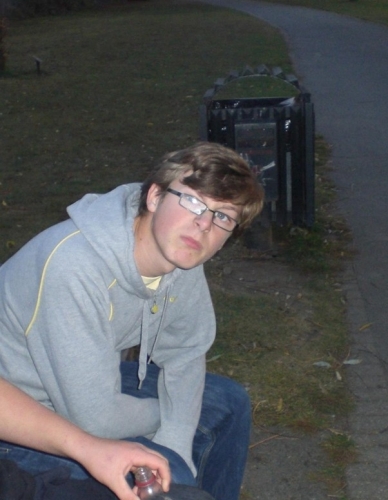
Author Michael Porter at the time of his expulsion from school
I was expelled as a result of my own poor decisions, and I take full responsibility for the choices and behaviour that led to that outcome. By that point, however, I was already disengaged and emotionally exhausted. I didn’t trust education, and I had very little belief in myself or my future. School felt like a place where I was constantly failing to meet expectations that didn’t take my reality into account.
Arriving at the Unit: A First Impression That Changed Everything
I remember walking down the path to the unit for the first time and seeing the lead teacher. My immediate thought was, “I am not going to like this man.” At that point, I didn’t trust professionals or education, and I fully expected more of the same. My guard was firmly up, and based on my past experiences, that felt sensible.
“I have heard plenty of stories about you, but I take you for who you are now, not for what you’ve done in the past.”
Not long after arriving, I remember saying to him that he must have heard a lot of stories about me from my previous school. By that point, I was used to my reputation arriving before I did. His response stopped me in my tracks.
He said, “I have heard plenty of stories about you, but I take you for who you are now, not for what you’ve done in the past.”
That moment changed my life. For the first time, I realised I had an opportunity to be who I wanted to be, not what others expected me to be. I wasn’t being defined by my past, my mistakes, or my behaviour record. I was being seen as a human being in the present. That realisation gave me hope, but it also gave me responsibility, responsibility to step into that new opportunity.
For the first time, someone in education believed that who I was now mattered more than who I had been.
Studying at the Unit: Humanity Before Hierarchy
Studying at the unit felt completely different from anything I had experienced before. The unit didn’t just look different, it felt different. From the outset, there was no rigid hierarchy where staff were above students. Instead, there was mutual respect. Staff and students were treated as equals in terms of value and humanity. Expectations existed, but they were built on trust and relationships rather than authority or fear.
That sense of equality created safety. You were spoken to, not spoken down to or made to feel small because of your past. You were listened to. That alone made engagement feel possible.
Learning was designed around us as individuals. Lessons were shorter and more focused, recognising that many of us struggled with concentration after trauma, stress, exclusion, or negative educational experiences. Short breaks were built into the day, allowing us time to pause, reset, and regroup when needed. Instead of being pushed until emotions escalated, we were supported to recognise when we needed a moment and encouraged to take it.
Classes were small, which meant fewer distractions and far more meaningful connections. Staff had time to know us properly, not just our behaviour, but our personalities, interests, and triggers. Over time, that small setting helped us feel close as a group of people, not just individuals sharing a room. It felt safe, familiar, and supportive in a way I had never known in education before.
Schoolwork itself was personalised to our interests. Staff noticed what we cared about and used those interests to shape learning. That enhanced engagement, but more importantly, it reinforced a powerful message: you matter enough to be noticed. For young people who had often felt ignored or written off, that made a huge difference.
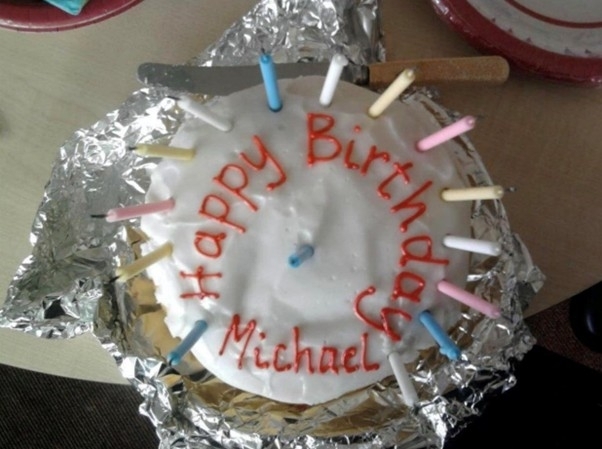
An education based on shared humanity…and shared cake!
Care was also shown in simple but meaningful ways. Both students’ and staff members’ birthdays were celebrated, usually with cake or treats. Everyone mattered equally. Those moments reminded us that we weren’t just students or staff, we were people. That sense of shared humanity was built on community, connection, and trust.
When students were having a difficult moment, the response reflected those same values. Instead of immediate punishment or escalation, we were often asked a simple question: “What do you need right now?”
That question encouraged reflection rather than reaction. It helped defuse situations and taught us how to recognise and communicate our needs, skills many of us had never been taught. Mistakes weren’t treated as failures, and support didn’t disappear because someone had a bad day. Consistency, dignity, and belief were always present.
Those moments reminded us that we weren’t just students or staff, we were people.
The unit showed me what it feels like to be treated like a human being.
Life Since Leaving: Carrying the Lessons Forward
Since leaving the unit, I’ve often come back to those words, “I have heard plenty of stories about you, but I take you for who you are now, not for what you’ve done in the past.”
For a long time, I had been defined by my past and by other people’s expectations. The unit helped me understand that people are not fixed and that change is possible when the environment allows it.
After leaving, I went on to achieve a degree, something that once felt completely out of reach for someone like me. I now work as a senior leader supporting young people who have experienced expulsion, difficult home lives, and low expectations from the systems around them.
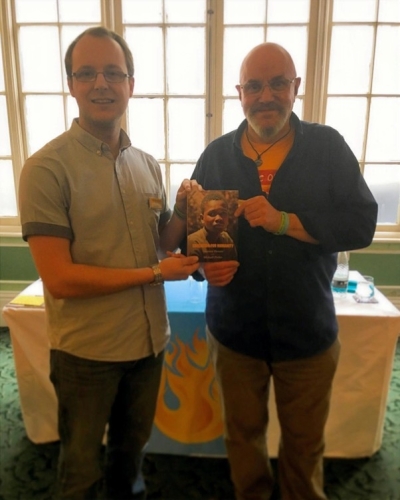
Michael Porter with co-author Simenon Honoré at the book launch of Education for Humanity
I later had the opportunity to write about my experiences at the unit alongside the lead teacher in Education for Humanity. Being able to share my perspective felt incredibly important, it gave me the chance to have my voice heard and brought a sense of closure to a difficult but transformative chapter of my life.
Much of how I work today comes directly from what I learned at the unit. I meet young people as they are now, not as the labels attached to them. I see behaviour as communication. I focus on humanity before hierarchy, relationships before rules, and understanding before judgment.
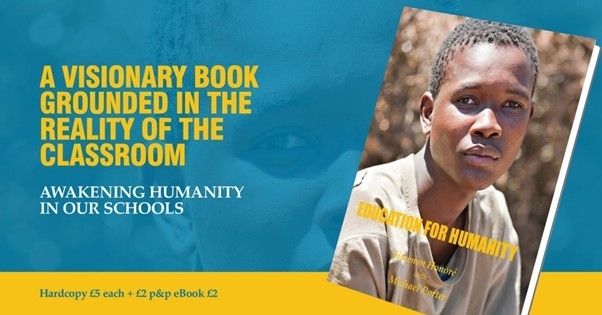
Education for Humanity taught me that when people are treated with respect, equality, and genuine care, they often rise to meet that treatment. The unit didn’t erase my past, but it changed my future and the lessons I learned there continue to shape my life, my values, and my practice every single day.
I take people for who they are now, in this moment because that belief once gave me the chance to become who I am today.
By Michael Porter
You can read more about the process in the book, Education for Humanity by Simenon Honoré and Michael Porter.
And you can also watch the video, Education for Humanity 2: An Experiment in Humanity in which they discuss the experience of working in an educational unit based on shared humanity.
The views expressed in this article are not necessarily those of Spirit of the Rainbow.
If you enjoyed this article, share it with a friend. And why not sign up for our newsletter?
Popular posts
You might also like
Email Newsletter Our latest articles and offers delivered straight to your inbox.