
“There are men and women who make the world better just by being the kind of people they are. They have the gift of kindness or courage or loyalty or integrity. It really matters very little whether they are behind the wheel of a truck or running a business or bringing up a family. They teach the truth by living it.”
― James A Garfield, 20th President of USA
Leaders of nations are supposed to work for everyone’s good. At the bare minimum they should strive for political and economic stability and justice for all. Some may drive reform or promote social revolution. Others may be peacemakers. But what about forging a spiritual path for their people? Should leadership encompass a spiritual element? How would it benefit a political environment?
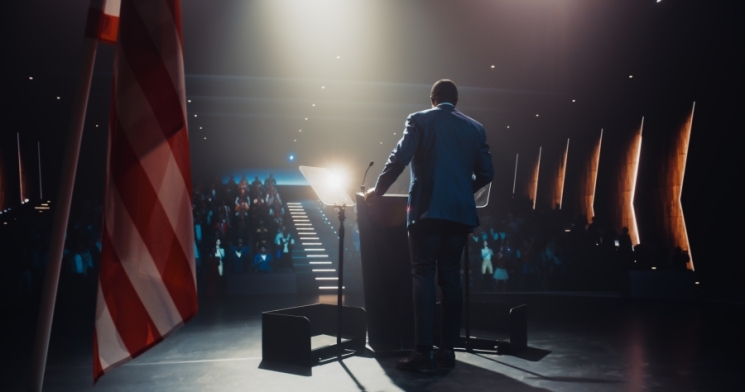
What makes a good leader?
The monarchs of the ancient and medieval world ruled with near absolute power. They may or may not have led their subjects wisely, but they were the ultimate authority. This kind leadership mostly no longer exists, but even in today’s democracies the concept of a “strong man” style often dominates. Moreover it seems to be on the rise. Leaders like Trump, Modi or Orbán, for instance, fall into this category. Some people want a leader who appears to have all the answers. Who will not “back down” when challenged. Who promises to make “everything right”, regardless of whether it is achievable or if their neighbours will suffer as a result. In authoritarian regimes, such as Russia, Iran or North Korea, where strict rules are enforced and severe consequences follow any transgression, the “strong man” style is even more clearly evident. Their people may want change but are powerless to make it happen. Are these “good leaders”?
Not everybody wants this type of governance. There are those who want a government that supports the needs and rights of all its citizens, addressing issues like climate change or gender equality. Yet within that same country their compatriots might pull in the opposite direction. And even in prosperous countries, people continue to suffer. At what point will this change?
Today, many leaders of all persuasions tend to offer crowd pleasing sound bites instead of workable solutions to complex problems. But quick fixes invariably beget worse problems because things haven’t been thought through. The problems in our world today need careful consideration the willingness to listen to all sides, to weigh up nuanced arguments and bring a mature, long term vision to their resolution. Pressing planetary environmental issues, globally interlinked markets, displaced populations and the looming possibility of another large scale war call for something other than platitudes. These issues require something else. Someone else. Someone for whom power is not the allure.
Are politics and spirituality mutually incompatible?
There is nothing inherently wrong with power, even political power. The problem comes in how we handle it. Or more accurately don’t handle it. When we don’t acknowledge the potentially destructive, corrosive impact of the misuse of power, it handles us instead. Its narcissistic influence can hollow out the economic and moral backbone of a country. As British historian Lord Acton famously observed in the late 19th century, “Power tends to corrupt and absolute power corrupts absolutely.” Sadly, this is as true today as it was then.
A leader determined to fight that kind of corruption was the 20th President of the United States, James Garfield (1831-1881). From what we know, he was one of the few to have demonstrated a more spiritual kind of leadership. When Greek philosopher Plato astutely pointed out in the 4th century BCE that those least interested in power are most qualified to hold it, he could have had someone like Garfield in mind. Not even running for president when his party chose him as their candidate, Garfield was by all accounts an intelligent, ethical and essentially kind human being. An abolitionist before the outbreak of the American Civil War, he was an advocate for civil rights, black suffrage and universal education.
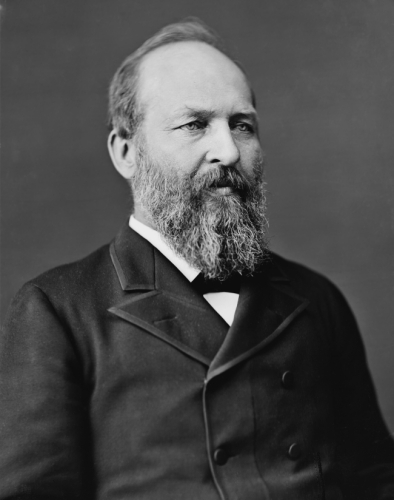
James A. Garfield, 20th President of the United States of America
Sadly Garfield was assassinated before he could fulfil his vision, so we cannot know how he would have performed as a president in the long run. Naturally he was not perfect, but since he was consistent in his character and actions it’s likely these would have spoken louder than the trappings of his office. For it appears that he valued more what the office could do for the people than what it could do for him. That, coupled with his forward-thinking agenda, would argue that his leadership was in many respects spiritual. It is disheartening that there are so few other leaders today with this level of integrity.
The problem with power
Power is like fire: it needs to be directed or it consumes everything around it. A well-tended fire allows us to transform metal into useful items or safely heat homes. Similarly, well directed power can change the lives of millions for the better. It can bring peace, prosperity and sustainability to the world. It can inspire people to change their behaviour for the greater good of humanity and the planet. It can allow people the means to realise their life’s work and, in doing so, benefit others. Power used in this way would shift the consciousness of the world from its current pattern of fear, self-centredness and unsustainable consumerism to openness, generosity, compassion and the progress of all humanity. That is the kind of power needed today. And always.

A new kind of leadership
Nothing will change, however, unless we change what kind of leader we want. One who is not motivated by material gain or personal influence but who is guided by integrity and spiritual principles that acknowledge the humanity of every individual under their care.
Politics informed by the spirit would naturally have human rights at its centre. The right to vote, justice, dignity and the freedom of speech. But more than that. True leaders would understand that we are part of an intricate social and environmental ecosystem where each part needs to flourish or all will fail. This should inform every one of their policies. Unless we have the right kind of leadership, we run the risk of slowly perishing, and our world with us. Unless our leaders encourage connectedness, cooperation and develop a global responsibility we will never break the cycle of “me first” and “only us”. Unless they realise that we – the people and the planet – are entirely interdependent, the path of greed and divisiveness that we are intent on following will lead us to self-destruction. We need to find the courage to choose men and women who can inspire us with their vision of a different world. A world where our quality of life and interactions with each other are our true wealth.
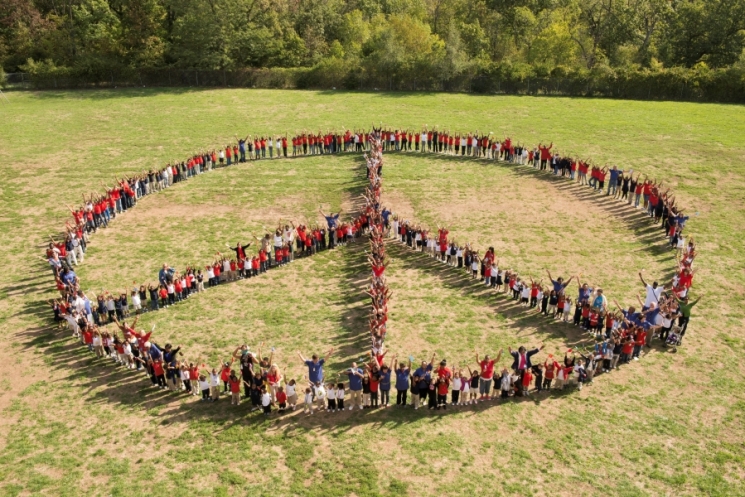
Perhaps it is naïve to expect a different kind of leadership for tomorrow’s world. Perhaps it is too great a shift in human nature to ask. But we must try. We must hope. Naturally there are no easy answers or quick fixes. We cannot expect perfection or instant success. Our leaders are bound to fail sometimes. But we need to choose the kind of leaders who will keep the end vision in mind. Who will offer considered solutions, support those who need help with the transition and encourage patience to allow those solutions time to bear fruit. Because we need solutions that leave no one behind. We need to ask more of our leaders. And ourselves.
By Thérèse Barton
The views expressed in this article are not necessarily those of Spirit of the Rainbow.
If you enjoyed this article, share it with a friend. And why not sign up for our newsletter?
Popular posts
You might also like
Email Newsletter Our latest articles and offers delivered straight to your inbox.