
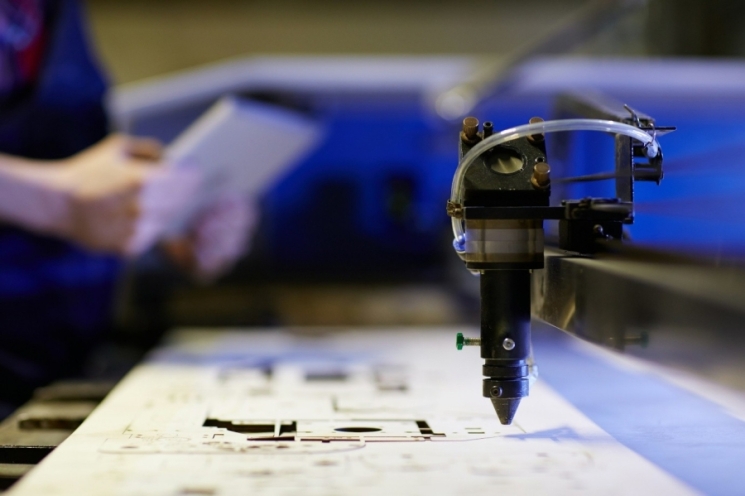
We live in a world where things are judged to be “perfect” or “imperfect”. These words can have a positive and useful meaning. For engineering or design, for example, it’s important that things fit together perfectly or that we can make perfect copies of plans. An imperfection can lead to a fatal flaw in which an aeroplane crashes or millions are lost on a project through faulty measurement. When we get down to the microscopic level, we see that in reality nothing is ever exactly perfect. There are always minute imperfections but for practical purposes, some things can be called “perfect” and others “imperfect”.
The Tyranny of Perfectionism
When we come to using them about humans, however, we start to encounter the dark side of “perfect” and “imperfect”. It is as if we must fit into a pre-determined mould of an ideal – that perfect body, perfect clothes, perfect lifestyle – the list is as endless as it is soul-crushingly oppressive. There is no room to be ourselves, no space to breathe, no freedom to grow. It is a fixed, rigid system into which we must squeeze or be seen to have failed the grade. It applies to the pressure put on women and men – maybe to look a certain way, to behave faultlessly, or to conform to a career. It comes at a terrible cost to ourselves, to being our own, unique, true selves.
There is no room to be ourselves, no space to breathe, no freedom to grow
Spiritually, our sense of “imperfection” may be handed down to us with the full weight of religion. In Christianity, we have the idea of “original sin”, a state of impurity we inherit from the “sins” of Adam and Eve: “Be perfect, therefore, as your heavenly Father is perfect” (Matthew 5:48) the Bible admonishes us. It seems an impossible ask. No wonder then, that in recent years, some spiritually minded people have revolted against this terrible burden of spiritual perfectionism and come up with a solution:
“Everything is Perfect”
We are perfect. We are born perfect. We are in the right time and the right place, growing just as we should, experiencing what we need to in life. Everything is perfect.
There is a truth to this. A rose whose petals have faded as it has come naturally to the end of its life cycle is not “imperfect” because it is no longer a flower in bloom. In the same way a bud is not an “imperfect” flower. The same holds true for us too.

Photo: Robert Ricker (Unsplash)
But in our sincere desire to escape the tyranny of perfectionsim, we can easily fall into the trap of wishful thinking and elasticate the meaning of “perfect” till it becomes virtually meaningless. Is a child born with a cleft palate “perfect”? In the sense of physical health, clearly not. Spiritually we could argue they were born with that challenge so its soul could experience what it needed to, but we can see the dangers of overusing the idea of everything being “perfect”. If every situation in life is “perfect”, and we are just where we are meant to be, what has happened to our free will? If we are free to choose, we are free to mess up, and end up in places that are far from “perfect” by any reckoning.
If we are free to choose, we are free to mess up
There is another way of looking at this. And it came from an unlikely source, a former leading Communist, Milovan Djilas, who came up with the word, “unperfect”.
Unperfect: The Birth of an Idea
Milovan Djilas was born in 1911 in the tiny mountain kingdom of Montenegro on the Adriatic coast. After World War I, it became part of the new state of Yugoslavia under a Royalist government. Milovan moved to its capital, Belgrade, as a student in 1929 and there joined the Communist party, at the time a banned organisation. He was arrested in 1933, tortured and spent three years in Sremska Mitrovica prison. In 1941, Yugoslavia was invaded by the Nazis, and Milovan Djilas joined the Communist Partisans, guerilla forces forming a key part of the Yugoslav resistance. With the Nazi defeat in 1945, he emerged as a war hero and senior member of the Communist government, which ran Yugoslavia after World War II.
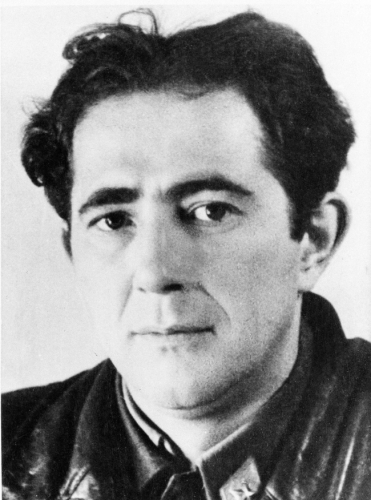
Yugoslavia's Communist government minister Milovan Djilas, April 29, 1946 (Alamy)
This was their chance to build their vision of “the perfect, or classless, society”, Milovan explained. But as their ideals became corrupted, Milovan Djilas saw this goal was simply the means “by which the Communists justified the continuation of their dictatorship and their own privileged position” as he wrote later in his book, The Unperfect Society. Trying to impose a utopian dogma on society, Communism simply degenerated into another repressive system, with which he fell out. Soon he found himself again in Sremska Mitrovica prison, but this time under the Communist authorities.
…utopian ideologies insist that society can be perfect and can create a great deal of human suffering in an attempt to attain the impossible
But Milovan Djilas did not simply become yet another disillusioned revolutionary. He thought deeply about the very nature of trying to build a “perfect society”. He wrote that he recognised the importance of ideas and ideals in order to improve and advance society, but argued that we should not regard them as being wholly realisable. Djilas explained that utopian ideologies insist that society can be perfect and can create a great deal of human suffering in an attempt to attain the impossible:
To speak of society as imperfect may seem to imply that it can be perfect, which in truth it cannot. The task for contemporary man is to accept the reality that society is unperfect, but also to understand that humanist, humanitarian dreams and visions are necessary in order to reform society, in order to improve and advance it”.
With his concept of “unperfect” we go beyond the duality of “perfect” and “imperfect” and understand ourselves and the societies we create as being in an evolutionary process, working towards ideals without the fixed goal of feeling we must get “there”, wherever we decide “there” is, either for us or our world. What he said holds true not just about Communism but societies and movements following religious ideals too, demanding perfection of their followers, however they define it.
By experiencing ourselves as “unperfect”, we give ourselves permission to grow, to experiment, to fail, to learn, to aspire freely, without the dead hand of feeling we have to be “perfect”, or that we are failing because we are “imperfect”.
Allowing ourselves to be unperfect frees us to be human.
By Simenon Honoré
The views expressed in this article are not necessarily those of Spirit of the Rainbow.
If you enjoyed this article, share it with a friend. And why not sign up for our newsletter?
Popular posts
You might also like
Email Newsletter Our latest articles and offers delivered straight to your inbox.